




































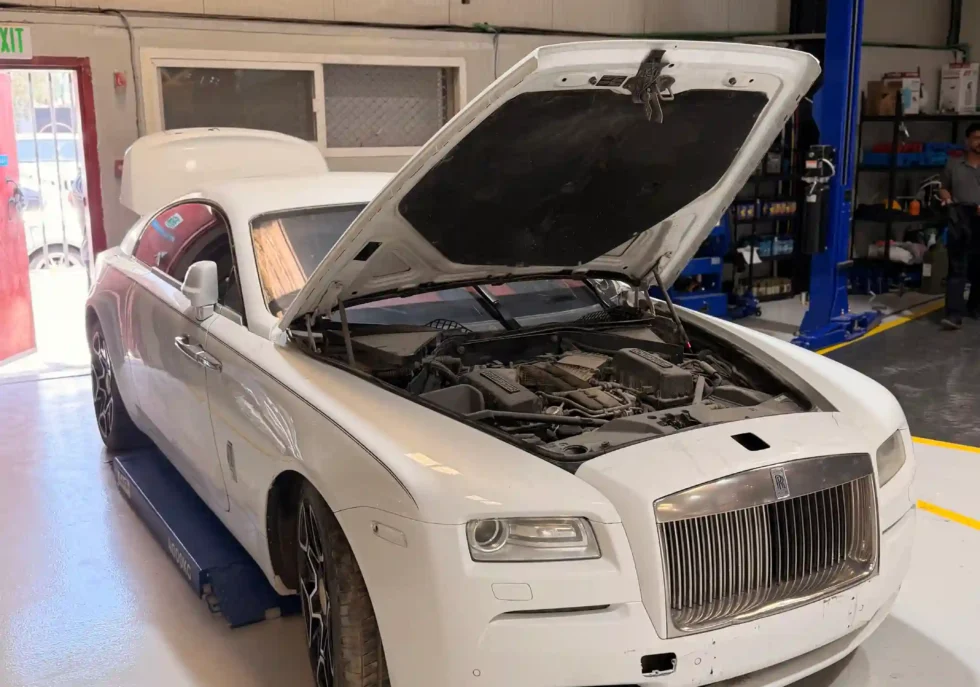
Why Is My Rolls-Royce Ride Rough or Bouncy? Causes, Warning Signs & What to Do
A Rolls-Royce that suddenly feels uncomfortable over speed bumps or uneven roads may have a problem with its suspension, tires, or related components. If your Ghost, Phantom, Cullinan, Wraith, or Dawn no longer feels as smooth as it used to, the change is worth investigating. Station One Autos provides Rolls-Royce repair and maintenance services in Al Quoz, Dubai, including suspension and brake service, mechanical repairs, and vehicle diagnostics.
The important thing is to understand what has changed. Does the vehicle continue bouncing after a bump? Does one corner sit lower after parking? Do you hear a knock when turning or travelling over uneven surfaces? These differences can help narrow down the possible cause. Let’s look at what may be happening underneath your Rolls-Royce and when an inspection is appropriate.
What Does a Rough or Bouncy Ride Actually Mean?
Not every uncomfortable ride points to the same fault. The way your Rolls-Royce responds to the road provides useful clues.
A bouncy ride usually means the vehicle continues moving up and down after passing over a road imperfection. This can happen when dampers are no longer controlling suspension movement effectively.
A harsh ride feels different. Instead of absorbing a bump comfortably, the vehicle transmits more of the impact into the cabin. Tyre pressure, damper condition, suspension settings, and mechanical problems may contribute.
An uneven ride height is another issue. If one side or corner appears lower than the others while the vehicle is parked on level ground, the suspension’s springing or height-control system may require investigation.
Understanding these differences is more useful than assuming that every change in comfort means the air suspension has failed.
1. The Suspension Is No Longer Controlling Body Movement Properly
Your vehicle’s suspension has two important jobs: supporting its weight and controlling how the body moves when the wheels encounter changes in the road surface. Springs absorb movement, while dampers control the speed and extent of that movement.
When a damper deteriorates, the vehicle may feel less settled after a speed bump. You might notice additional bouncing, excessive movement over dips or a change in stability when cornering.
A few observations can help describe the problem:
- Does the vehicle bounce more than once after a road bump?
- Does the front or rear feel less controlled?
- Has the ride become uncomfortable gradually?
- Does the problem occur on both smooth and uneven roads?
A technician should examine the relevant dampers, mounting points, and associated suspension components. The condition of the tyres should also be considered before deciding that a damper needs replacement.
2. Could the Air Suspension Be Losing Pressure?
Air suspension uses pressurized air to support the vehicle and, in applicable systems, maintain its intended ride height. An air spring or air strut can develop a leak as its seals and materials deteriorate. Air lines and connections can also become damaged.
One useful clue is what happens when the vehicle is parked. For example, suppose your Rolls-Royce looks level when you leave it overnight, but the rear corner appears noticeably lower the next morning. This could indicate that the suspension is not retaining air correctly.
Other signs worth noting include
- A visible difference in height between the left and right sides.
- A suspension warning message.
- Unusual changes in ride height.
- A longer-than-normal adjustment period.
- A noticeable change in comfort.
A vehicle sitting low does not automatically prove that an air spring is leaking. A valve, sensor, or another part of the height-control system could produce similar behavior. The source of the pressure loss, if present, needs to be identified before any component is replaced.
3. Why Does the Suspension Compressor Keep Running?
On vehicles equipped with air suspension, the compressor supplies the air needed by the system. If an air spring or connection leaks, the compressor may need to operate more frequently to maintain the required pressure. This is why an unusual compressor operating pattern should not be ignored.
You might notice:
- The compressor operating more often than previously.
- A change in the sound it makes.
- The vehicle taking longer to reach its normal height.
- Suspension warnings appearing alongside height changes.
There is an important distinction here: a compressor that runs frequently is not necessarily the original cause of the problem. It may be responding to an air leak elsewhere in the system. Replacing the compressor without checking the rest of the air supply system could leave the underlying fault unresolved.
4. Knocking Sounds Can Point Towards Mechanical Suspension Wear
A Rolls-Royce may have a rough ride without having an air suspension fault. The suspension also contains mechanical connections that allow the wheels to move while maintaining the correct position and control. These include control arms, ball joints, rubber bushings, mounting points, and other joints.
As components wear, unwanted movement can develop.
You may hear:
- A knocking sound when crossing speed bumps.
- A clunk when entering or leaving a driveway.
- A noise when steering at low speed.
- Repeated sounds from one wheel area on uneven roads.
The location and timing of the noise matter. A sound heard when turning may require a different investigation from one that occurs only when the wheels move vertically over a bump. A physical inspection helps establish whether the noise is coming from a suspension joint, mounting point, or another nearby component.
5. Your Tires May Be Affecting Ride Comfort
Before focusing entirely on the suspension, consider the condition of your tires. Tyres have a direct influence on how road impacts are transmitted into the vehicle. Their pressure, condition, size and construction all matter.
An incorrect pressure setting can make the ride feel noticeably different.
Other possible problems include:
- Uneven tread wear.
- Sidewall damage.
- A tyre that has lost pressure.
- Incorrect tyre specifications.
- Wheel imbalance causing vibration.
For a Rolls-Royce, tyre selection should follow the vehicle manufacturer’s specifications. The correct pressure should also be checked using the recommendations for the particular model and loading conditions. If the discomfort is accompanied by vibration through the steering wheel, investigate the wheels and tyres as well as the suspension.
6. Electronic Suspension Warnings Should Not Be Ignored
Some Rolls-Royce suspension systems rely on electronic monitoring and control. Depending on the model, sensors and control electronics help monitor suspension movement, vehicle height and other operating conditions.
If the system detects information outside its expected range, a warning may appear. However, a dashboard warning does not identify the failed part by itself.
The problem could involve a sensor, wiring connection, control-related issue or a mechanical component affecting the system. The useful next step is to record the exact warning message and have the relevant system investigated. Replacing a component simply because a suspension warning has appeared is not a reliable diagnostic method.
7. Why the Exact Rolls-Royce Model Matters
It is important not to treat every Rolls-Royce suspension system as identical. The Phantom, Ghost, Cullinan, Wraith and Dawn have different model generations and technical configurations.
For example, the newer Ghost introduced the Planar Suspension System, incorporating self-levelling air struts, electronically controlled shock absorbers and the Flagbearer road-scanning system.
This should not be confused with the equipment fitted to every earlier Ghost or other Rolls-Royce model. The model year and vehicle specification therefore matter when investigating ride-quality problems. A repair recommendation should be based on the system actually fitted to the vehicle, not a generic description of Rolls-Royce suspension technology.
8. Does Dubai Driving Contribute to Suspension Problems?
Road conditions are another part of the picture. Driving over speed bumps at excessive speed, striking potholes or repeatedly encountering uneven road surfaces can place additional stress on tyres, wheels and suspension components. In Dubai, owners may also experience long periods of high ambient temperatures. Vehicle condition, rubber components and tyre maintenance deserve attention, particularly when a vehicle spends extended periods parked outdoors.
Whether you regularly drive around Al Quoz, Business Bay, Downtown Dubai, Jumeirah or Dubai Marina, the useful approach is to pay attention to changes in the way your vehicle responds to the road. A change in ride comfort should be investigated based on its actual symptoms rather than attributed to Dubai’s climate alone.
9. Can You Continue Driving When Your Rolls-Royce Feels Bouncy?
The answer depends on how severe the symptoms are. A slight change in ride comfort does not necessarily mean the vehicle is immediately unsafe. However, significant suspension problems can affect wheel control, handling and vehicle stability.
Avoid continuing your journey if:
- The vehicle is leaning significantly to one side.
- A wheel appears unusually close to the body.
- The vehicle feels unstable when steering.
- There is severe knocking or grinding.
- A suspension warning is accompanied by abnormal handling or ride height.
In these circumstances, arrange appropriate roadside assistance or vehicle recovery rather than taking unnecessary risks. If the vehicle remains stable but its ride quality has noticeably changed, arrange an inspection promptly. Never place yourself underneath a vehicle supported only by its air suspension. Its height can change unexpectedly.
10. What Information Should You Give the Workshop?
You can make the inspection more useful by describing exactly what you have experienced.
Instead of simply saying that the car feels uncomfortable, try to explain:
When does the problem occur?
Is it noticeable over speed bumps, at motorway speeds, during cornering or when the vehicle is parked?
Where do you feel it?
Does the front feel rough, does the rear bounce, or does the entire vehicle seem unsettled?
Has the vehicle changed height?
Mention whether one corner appears lower or the vehicle sits differently after being parked overnight.
Are there any additional signs?
Report dashboard warnings, unusual noises, steering vibration or changes in tyre wear. This information helps the workshop understand the complaint and decide which areas should be checked first.
11. What Happens During a Rolls-Royce Suspension Inspection?
The purpose of an inspection is to identify the reason for the change in ride quality rather than immediately recommend a replacement part. Depending on the symptoms and vehicle specification, the investigation may include:
- Checking the vehicle’s visible ride height on a suitable level surface.
- Examining suspension components for damage, wear or leakage.
- Inspecting relevant suspension joints and mounting points.
- Reviewing tyre condition and inflation pressure.
- Investigating dashboard warnings and available diagnostic information.
- Assessing whether further mechanical or electrical checks are required.
Not every vehicle requires every test. The inspection should be guided by the owner’s complaint and the findings. Once the cause is established, the workshop should explain the recommended work, the parts involved and the expected cost before repairs are approved.
12. Rolls-Royce Suspension Repair in Al Quoz, Dubai
When a Rolls-Royce develops unusual bouncing, harshness, suspension noise or uneven ride height, it is important to have the underlying issue investigated. Station One Autos provides Rolls-Royce repair and maintenance services at its workshop in Al Quoz Industrial Area 1, Dubai. Our Rolls-Royce service offering includes suspension and brake service, mechanical repairs, electrical diagnostics and vehicle inspections.
We work with models including:
- Rolls-Royce Ghost
- Rolls-Royce Phantom
- Rolls-Royce Cullinan
- Rolls-Royce Wraith
- Rolls-Royce Dawn
If your vehicle is no longer delivering its usual ride comfort, contact the workshop and explain what you have noticed. Our team can discuss your vehicle’s symptoms, inspect the reported concern and provide a repair estimate based on the findings.
For owners travelling from Downtown Dubai, Business Bay, Jumeirah, Dubai Marina and surrounding parts of Dubai, the workshop is located in Al Quoz Industrial Area 1.
Frequently Asked Questions
Why does my Rolls-Royce bounce several times after a speed bump?
Repeated movement after a bump can indicate that the dampers are not controlling suspension movement effectively. Other suspension or tyre-related issues may contribute. The affected area needs inspection before a repair can be recommended.
Why does my Rolls-Royce sit lower after being parked overnight?
A change in height after parking can indicate an air leak or a problem with the suspension’s height-control system, where fitted. The affected corner and related components should be examined.
Can a faulty suspension compressor cause a rough ride?
It can contribute to suspension problems if the system cannot maintain the required air pressure. However, frequent compressor operation may also be a symptom of a leak elsewhere.
Why does my Rolls-Royce make a knocking sound over speed bumps?
Possible causes include worn bushings, ball joints, control arms or suspension mounting points. The noise should be located before replacing any parts.
Can incorrect tyre pressure affect Rolls-Royce ride comfort?
Yes. Incorrect tyre pressure can change the way road impacts are absorbed and may also affect handling and tyre wear. Always follow the manufacturer’s recommended pressure.
Does every Rolls-Royce use the same air suspension system?
No. Suspension equipment differs by model, generation and specification. The exact vehicle should be identified before diagnosing a suspension fault.
Is a suspension warning light always caused by a faulty air spring?
No. The warning may relate to a sensor, electrical issue, air supply problem or another suspension component. The warning and available diagnostic information need to be investigated.
How much does Rolls-Royce suspension repair cost in Dubai?
There is no single price for every suspension problem. The cost depends on the vehicle, the failed component, parts availability and the work required. An inspection is the appropriate starting point for an accurate estimate.
Where can I get my Rolls-Royce suspension checked in Dubai?
Station One Autos is located in Al Quoz Industrial Area 1, Dubai. Contact the workshop on +971 58 652 2602 to discuss your Rolls-Royce suspension concern.
Final Thoughts
A rough or bouncy ride is a symptom, not a diagnosis. The problem may involve dampers, air suspension, mechanical joints, tyres or electronic suspension controls. Pay attention to when the change occurs, whether the vehicle sits evenly and whether any unusual noises or dashboard messages appear. These details can help narrow down the investigation. If your Rolls-Royce no longer feels as comfortable or controlled as it should, contact Station One Autos in Al Quoz, Dubai, to discuss an inspection and learn more about Why Is My Rolls-Royce Ride Rough or Bouncy.