




































Rolls-Royce Air Suspension Problems: Symptoms, Causes & Repair Guide
Rolls-Royce air suspension problems usually show up as a corner or an entire axle sitting lower than normal, a car that sinks overnight, a suspension warning message, slow lifting after start-up, a compressor that seems to run often, or a ride that feels harder or bouncier than it should. None of these symptoms proves which part has failed. A leaking air spring, a damaged air line, a weak compressor, a faulty valve, a ride-height sensor, or an electrical fault can all look similar from the driver’s seat. If you notice any of them, avoid long drives, have the car scanned and inspected by a Rolls-Royce specialist, and do not replace parts until the fault has been confirmed.
How Rolls-Royce Air Suspension Works
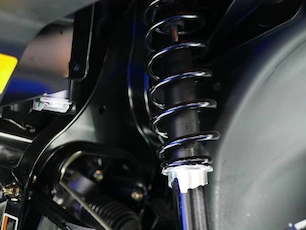
A conventional car holds its weight on steel coil springs. A Rolls-Royce uses air springs instead: flexible, sealed units filled with pressurized air. Changing the pressure raises or lowers that corner of the car, which is how the suspension keeps the body level whether you are alone or carrying four passengers and luggage, and how it delivers the smooth, floating ride the brand is known for.
Several parts work together:
- Air springs (air struts): the air-filled units at the wheels that carry the weight of the car. On many luxury cars they are combined with an electronically controlled damper.
- Compressor: a pump that creates the compressed air the system needs.
- Air lines and fittings: the pipes and connectors that carry air around the car.
- Valve block and solenoid valves: a set of electrically operated valves that send air to, or release it from, each spring.
- Ride-height sensors: sensors that tell the control unit how high each corner of the car currently sits.
- Control module: the computer that reads the sensors and commands the compressor and valves.
- Air reservoir (where fitted): a stored volume of air. Not every system or model uses one, so this should be confirmed for the exact car.
- Dampers: the shock absorbers that control how the body moves. They are separate from the air springs but work with them.
Because these parts depend on each other, one weak component can put extra stress on another. That is why a good diagnosis matters more than a quick guess.
Common Warning Signs of Air Suspension Trouble
For each sign below: what you notice, what it might indicate, and what should be checked. “Might indicate” is deliberate. These are possibilities, not diagnoses.
One corner sitting lower than the others
What you notice: One wheel arch looks closer to the tyre, or the car leans slightly.
What it might indicate: A leaking air spring is a common explanation, but a leaking air line or fitting, a valve problem or a faulty ride-height sensor reading can produce a similar picture.
What should be checked: Ride height at all four corners, stored fault codes, and the air spring, lines and fittings for leaks before any part is ordered.
The car dropping overnight
What you notice: The car sits normally after driving but is lower by morning.
What it might indicate: Air is escaping slowly from somewhere in the system. The leak may be at an air spring, a line connection or a valve.
What should be checked: A leak test after the car has stood, and a note of whether the same corner always drops first. That detail helps the technician narrow the search.
Uneven front or rear ride height
What you notice: The front is lower than the rear, or the reverse, or the left and right sides differ.
What it might indicate: Pressure loss on one axle or side, a sensor reporting incorrect height, or the control system not distributing air correctly.
What should be checked: Measured ride height against the specification for that model, live sensor readings and the valve and line condition.
Suspension warning messages
What you notice: A message or warning symbol on the instrument cluster or display.
What it might indicate: The system has detected a value outside its expected range. This can come from a mechanical leak, a sensor signal, a wiring or connector problem or a control fault.
What should be checked: A full scan of the relevant modules, followed by tests to confirm what the stored fault actually points to. A stored code identifies where the system noticed a problem. It does not always identify the failed part.
Slow lifting
What you notice: The car takes longer than usual to rise, or does not reach its normal height.
What it might indicate: A tired compressor, a leak that lets air out as fast as it goes in, a restricted line, or a valve that is not opening properly.
What should be checked: Compressor operation and system pressure where applicable, and a leak check before blaming the compressor alone.
Compressor running frequently
What you notice: You hear the pump working more often or for longer than you are used to.
What it might indicate: A leak somewhere in the system makes the compressor work harder to hold pressure. Frequent running is often a clue about a leak rather than proof that the compressor itself is faulty.
What should be checked: The whole system for leaks first, then the compressor’s condition and output.
Hissing sounds
What you notice: A hiss near a wheel arch or under the car, especially after switching off.
What it might indicate: Escaping air. The source could be an air spring, a line fitting or the valve block.
What should be checked: Leak-detection at each fitting and spring to find the exact point.
A harder, bouncier or uncomfortable ride
What you notice: The ride feels firm, floaty or less composed over bumps.
What it might indicate: Low pressure in a spring, a worn damper, or a system fault that has changed how the car manages its suspension.
What should be checked: Spring pressure and height, damper condition and fault codes. Do not assume the air springs are the cause, because worn dampers can create a similar feeling.
Changes in handling or uneven tyre wear
What you notice: The car feels less stable, pulls to one side, or tyres wear unevenly.
What it might indicate: Incorrect ride height changes the wheel geometry, which can affect handling and wear patterns over time. Alignment and tyre problems can cause the same symptoms.
What should be checked: Ride height first, then alignment and tyres. Aligning a car that is sitting at the wrong height gives misleading results.
Symptom, Cause, Diagnosis and Repair: Four Different Things
These four terms are often mixed up, and mixing them up is how owners end up paying for parts they did not need.
- Symptom: what you see or hear, such as a low corner.
- Possible cause: a part that could explain the symptom, such as an air spring, a line or a valve.
- Confirmed diagnosis: a cause that testing has actually proven, for example a leak located at a specific fitting.
- Recommended repair: the work that follows from that confirmed diagnosis.
A car sitting low does not automatically mean the air strut needs replacing. The air lines, valve block, compressor and sensors may need inspection as well.
Common Causes of Rolls-Royce Air Suspension Faults
Damaged or leaking air springs
The flexible air spring material can age, crack or be damaged by road debris. When it leaks, the car loses height at that corner, and the compressor works more to compensate.
Weak or failed compressor
Compressors wear with use. They can also be strained by a leak elsewhere that makes them run far more than they were designed to. Replacing a compressor without finding the leak that overworked it risks a repeat failure.
Leaking air lines and connections
Lines are joined by fittings with seals. Seals can harden and leak with age, and lines can be damaged by rubbing or impact. Small leaks here are easy to miss and can drain the system slowly.
Faulty valve block
The valve block contains solenoid valves that open and close to direct air. Worn seals or sticking valves can cause air to leak between circuits or prevent air reaching a spring.
Defective ride-height sensor
The control unit relies on sensor signals to decide when to add or release air. A wrong signal can cause incorrect height or inconsistent adjustments even when the mechanical parts are healthy. These faults can mimic leaks, which is why sensors are checked before parts are replaced.
Electrical or control module issues
Wiring damage, corroded connectors, a weak power supply or a control module fault can interrupt commands to the compressor or valves. This is less common than a leak, but it must be ruled out, especially when the fault comes and goes.
Related damper and suspension faults
Worn dampers, bushes or other suspension components can create ride and handling complaints that feel like air suspension trouble. A thorough inspection looks at the whole suspension, not only the air parts.
How these faults affect each other
A slow leak makes the compressor run more. The extra running can wear the compressor faster. A faulty valve can let air escape or stop air getting through, which can look like a failing spring. A bad sensor can make a healthy system behave strangely. Treating only the most obvious symptom often leaves the underlying fault in place.
Model-Specific Considerations
Not every Rolls-Royce uses the same suspension hardware or technology, and procedures and calibration can differ. The details below are limited to what manufacturer and reliable published information supports. For anything else, the exact configuration should be confirmed from the car’s VIN, model year and specification.
Ghost (second generation, launched 2020): This car introduced Rolls-Royce’s Planar Suspension System. Rolls-Royce describes it as an upper wishbone damper above the front suspension assembly, working together with the Flagbearer camera system and Satellite Aided Transmission, managed by Planar software. It sits alongside self-levelling high-volume air struts and electronically controlled shock absorbers. For repair, this means the control and damper side of the system is more complex than on earlier cars.
Phantom and Cullinan: Published coverage states that both cars have a version of the Flagbearer system, in which cameras read the road ahead to prepare the suspension. Do not assume they have the Ghost’s Planar upper wishbone damper arrangement, since reports describe that as new to the second-generation Ghost.
Earlier Ghost, Wraith and Dawn: These are older designs than the second-generation Ghost. We do not apply Planar or Flagbearer technology to them. Their air suspension layout, component locations and calibration needs should be checked against the specific car rather than assumed from a newer model.
We do not publish failure-rate comparisons between models, because there is no reliable public data to support them.
UAE Driving and Climate Considerations
Heat, dust and long parking periods are fair things to ask about, but they should not be blamed for every fault.
- High temperatures: Rubber and flexible materials generally age faster under heat, and extreme temperature changes are widely cited as a factor in air spring deterioration. Heat is a possible contributor to ageing. It is not proof that a particular failure was caused by climate.
- Extended parking: A car left standing for weeks gives a small leak time to drop the car fully, which makes a problem obvious. It does not create the leak. However, a car that is rarely driven may also have seals that dry out, so condition after long storage deserves a check.
- Dust and exposure: Dust and grit can get around exposed components, and debris can damage springs and lines. How much this matters depends on the car’s use and where it is parked.
- Road conditions: Speed bumps, kerbs, potholes and building-site roads can stress suspension parts or cause impact damage.
- Age and mileage: Older cars and higher-mileage cars have had more time for seals, springs and sensors to wear, wherever they are driven.
- Maintenance history: Previous leak repairs, parts replaced earlier and how the car was stored all help a technician understand the present fault.
Where evidence is limited, the honest answer is that UAE conditions can contribute to wear but cannot be named as the cause without a proper inspection.
How a Specialist Diagnoses Air Suspension Problems
The steps below describe a sensible workshop approach. They are a general diagnostic method and not an official Rolls-Royce procedure.
- Confirm the model, year and fitted system. This decides which components, tools and calibration steps apply.
- Listen to the owner. When the problem started, whether it happens overnight, in heat, after parking or only intermittently.
- Inspect ride height. Check all four corners and compare against the specification.
- Scan fault codes. Read the relevant modules and note what is stored, treating codes as pointers, not final answers.
- Inspect for leaks. Check the air springs, lines and connections, using leak-detection methods where needed.
- Test the compressor. Check operation and system pressure where applicable.
- Check sensors, valves, wiring and control. Look at sensor readings, valve operation, connectors and power supply.
- Confirm the failed component. Only recommend replacement when testing has located the actual fault.
- Calibrate and recheck. Carry out required calibration, then test drive and verify there are no remaining faults.
Repair Solutions for Confirmed Faults
The right repair depends on what has been confirmed on your car.
- Leaking air spring or strut: The unit is typically replaced. Technicians usually check the related lines, the compressor’s condition and the damper at the same time.
- Leaking air line or fitting: The damaged line or seal is repaired or replaced, and the system is retested for pressure loss.
- Compressor fault: The compressor is replaced or repaired after confirming it is the failed part, and the cause of any overwork, such as a leak, is also resolved.
- Valve block fault: The valve block, or the faulty valve within it, is addressed after testing confirms it.
- Ride-height sensor fault: The sensor is replaced or its connection corrected, followed by calibration.
- Electrical or module fault: Wiring, connectors, power supply or module issues are traced and corrected. Module work may need coding or programming.
- Damper or suspension component wear: The worn component is replaced and ride height and alignment are rechecked.
After any repair, ride height checks and calibration where required should be part of the job, not an extra.
What Affects Repair Cost
We do not quote prices in a general article, because a fair figure depends on the car and the confirmed fault. These factors usually decide the cost:
- Which model and generation the car is.
- Whether the fault is one component or several linked ones.
- Which parts are needed and their availability.
- Labour time, including access and calibration.
- Whether the car has been standing for a long time or has had earlier repairs.
A written estimate should follow diagnosis, and it should explain what was found.
Can You Keep Driving With an Air Suspension Fault?
It depends on the symptom. A warning message with normal ride height is less urgent than a car sitting very low or leaning. A very low car can scrape, damage tyres, affect steering and braking stability, or cause further damage. If the car is clearly low, uneven or behaving unusually, do not take it on a long journey, and arrange an inspection or recovery. If you need to lift the car on a jack, use the correct procedure for your model, because air suspension cars can behave differently from conventional ones.
Preventing Larger Problems
- Do not ignore small drops in height or a warning message that comes and goes.
- Note when symptoms happen and whether the same corner is involved.
- Have leaks fixed early, since a leaking system makes the compressor work harder.
- Drive over speed bumps and kerbs carefully.
- Keep a service record so a technician can see earlier work.
- Use a workshop that diagnoses before replacing parts.
Frequently Asked Questions
Why is my Rolls-Royce sitting low on one side?
Common possibilities include a leaking air spring or line, a valve issue or a faulty height sensor reading. The cause needs to be confirmed by inspection and testing.
Why does my Rolls-Royce suspension drop overnight?
Air is likely escaping from somewhere in the system. A leak test will help find whether the source is a spring, a fitting or a valve.
What does a Rolls-Royce suspension warning message mean?
It means the system has detected something outside its expected values. A scan and further testing are needed to find what is behind it.
Is the compressor always the problem when the car is slow to rise?
No. A leak, a valve fault or a restricted line can also slow lifting. A compressor that runs often may be working hard because of a leak.
Does Dubai heat destroy Rolls-Royce air suspension?
Heat can speed up the ageing of rubber and flexible parts, but it is not the only factor. Age, mileage, road conditions and maintenance history also matter.
Can I drive my Rolls-Royce with a suspension warning?
It depends on how the car is behaving. If the ride height is very low or uneven, avoid driving it and get it inspected.
Do all Rolls-Royce models use the same suspension?
No. The second-generation Ghost uses the Planar Suspension System, while Phantom and Cullinan are reported to use Flagbearer. Each car’s exact system should be confirmed.
Should I replace the air strut as soon as the car sits low?
Not before diagnosis. Several other components can cause the same symptom.
Get Your Rolls-Royce Air Suspension Checked in Dubai
If your Rolls-Royce is sitting low, dropping overnight or showing a suspension warning, the useful first step is a proper diagnosis, not a guess. Station One Autos in Dubai can inspect the car, confirm the fault and explain the repair options before work begins. Learn more about our Rolls-Royce service in Dubai, or read our wider guide to common Rolls-Royce problems in Dubai. To book an inspection, contact Station One Autos