

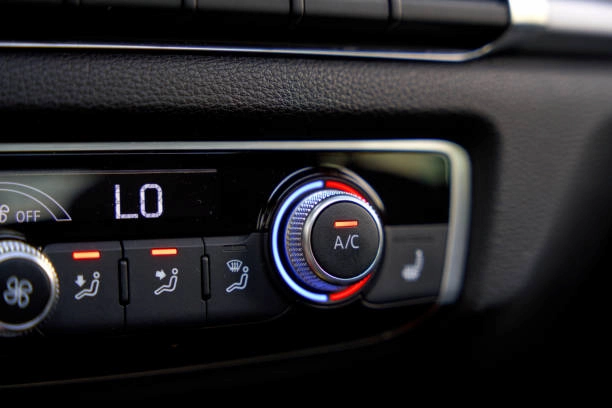
Land Rover AC Not Cooling? Common Causes & Repair Guide
Land Rover AC Not Cooling? Common Causes & Repair Guide
There’s a specific kind of frustration in climbing into a hot Land Rover, turning the temperature all the way down, and feeling… nothing change. Whether it’s a Range Rover that used to blast icy air and now just blows lukewarm, or a Defender that cools fine on the motorway but turns warm the second you’re stuck in traffic, the underlying question is the same: what’s actually going wrong in there?
This guide walks through the real mechanical and electrical reasons a Land Rover AC stops cooling properly, how to read your specific symptoms, what you can safely check yourself, and what genuinely needs a professional diagnostic process. The goal isn’t to sell you a repair — it’s to help you understand your car well enough to make a good decision about the next step.
How Does a Land Rover AC System Work?
A vehicle AC system is really a heat-moving loop, not a heat-making one. It doesn’t “create” cold air — it removes heat from the air inside the cabin and dumps that heat outside.
The compressor, driven by the engine, pressurizes refrigerant gas and pushes it through the system. That high-pressure refrigerant travels to the condenser, mounted at the front of the vehicle, where outside airflow cools it back into a liquid — this is the same basic job the main radiator does for engine coolant, just for refrigerant. The liquid refrigerant then passes through the expansion valve, which drops its pressure sharply before it enters the evaporator, tucked inside the dashboard. As the refrigerant expands and evaporates there, it absorbs heat from the air blown across it by the blower motor — that’s the cold air you feel at the vents.
Along the way, the cabin air filter cleans the incoming air, various sensors monitor pressure and temperature, and the climate control module decides how much of that cooled air gets blended with warmer air and where it’s directed. A fault at any single point in this chain can stop the whole system from delivering cold air — which is exactly why “my AC isn’t cooling” can have so many different underlying causes.
Common Reasons Your Land Rover AC Isn’t Cooling
Low Refrigerant or Refrigerant Leak
Refrigerant is what actually carries heat out of the cabin, so if there isn’t enough of it circulating, cooling performance drops — sometimes gradually, sometimes suddenly. It’s worth being clear about one thing: refrigerant is sealed in a closed loop and doesn’t get “used up” through normal driving. If the level is low, refrigerant has almost always escaped somewhere, even if the loss is slow enough that there’s no obvious puddle or smell.
Common leak points include the rubber seals and O-rings at hose connections, the hoses themselves as they age, the condenser (particularly vulnerable to stone chips and road debris since it sits at the front of the car), the evaporator, and the service ports used to charge the system. A slow leak might show up as gradually weakening cooling over weeks or months, while a sudden leak — say, from a cracked line — can mean the AC goes from cold to warm almost overnight.
This is a case where DIY refrigerant handling isn’t a good idea. Refrigerant is stored under pressure, R1234yf (used in many newer vehicles) is mildly flammable, and adding gas without knowing the correct type, capacity, or oil requirement can create bigger problems than the one you started with. Locating and properly repairing the leak is what actually fixes the issue.
AC Compressor Problem
The compressor is the pump that keeps refrigerant moving through the whole system, and it’s mechanically one of the hardest-working parts of the car. When it starts to fail, you might notice weak or absent cooling, unusual noise from the front of the engine bay when the AC is switched on, or cooling that cuts in and out as the compressor clutch struggles to engage consistently.
It’s worth resisting the urge to assume every case of warm air is a dead compressor — that’s a fairly common overgeneralization. Compressor problems are one possible cause among several, and they’re usually confirmed by checking pressures, clutch engagement, and mechanical condition rather than guessed from symptoms alone.
Condenser Problem
The condenser’s whole job is heat rejection — moving heat out of the refrigerant and into the outside air. That only works if air can actually flow through its fins freely. A condenser that’s clogged with dust, insects, or road debris, physically damaged from a stone strike, or corroded internally won’t reject heat efficiently, and cooling suffers as a result. In dusty, sandy environments like Dubai, condensers can accumulate debris faster than in cooler, cleaner climates, which makes this a genuinely more common contributor to AC complaints locally.
Cooling Fan Problem
This is one of the more misunderstood symptoms: AC that’s ice-cold while driving but turns warm as soon as the vehicle stops or idles.
At speed, air is forced through the condenser naturally by the car’s forward motion — the same way a radiator gets extra airflow on the highway. At a standstill, the system depends on the electric cooling fan(s) to push air through the condenser instead. If that fan isn’t spinning at the right speed, or isn’t running at all, the condenser can’t shed heat properly once the car stops moving, and cooling performance drops.
That said, this symptom doesn’t automatically prove the fan has failed. A restricted condenser, a refrigerant charge issue, or a pressure-related fault can all produce a similar pattern. It’s a strong diagnostic clue, not a confirmed diagnosis — which is why a proper check involves observing the system’s behavior at idle and under load rather than replacing the fan on a hunch.
Dirty Cabin Air Filter
It’s worth separating two different complaints that often get lumped together: weak airflow and warm airflow. A clogged cabin filter restricts how much air the blower can push through the vents — so the AC might genuinely be cooling the air correctly, but only a trickle of it reaches you. That’s a very different problem from air that flows normally but simply isn’t cold. If your airflow feels noticeably weaker than it used to, even at the highest fan speed, the filter is one of the first and easiest things worth checking.
Blower Motor or Blower Control Problem
The blower motor is what pushes air across the evaporator and out through the vents. A failing blower can produce weak airflow, airflow that only works on certain fan speeds, intermittent operation, or unusual noise from behind the dashboard. Because the blower is controlled electronically on most modern Land Rovers, the fault can sit in the motor itself or in the resistor/control module that regulates its speed.
Expansion Valve Problem
The expansion valve meters how much refrigerant enters the evaporator. Too much or too little flow through a faulty valve throws off the whole cooling process — the evaporator might not get cold enough, or in some cases it can even ice up internally, which further restricts airflow and cooling. This is a less common fault than refrigerant or compressor issues, but it does happen, especially on higher-mileage vehicles.
Evaporator Problem
The evaporator does the actual cooling of the air inside the cabin, so a fault here directly affects performance. Evaporators can develop leaks (a fairly frequent, if less obvious, source of refrigerant loss since the component is hidden inside the dashboard), become contaminated with debris or mold, or get restricted internally. Because the evaporator sits deep inside the dash assembly, diagnosing and replacing it is often one of the more involved repairs in the whole AC system — which is also why it’s worth ruling out simpler causes first.
Sensor or Electrical Problem
Modern Land Rover climate systems lean heavily on sensors and electronics: pressure sensors that protect the compressor, temperature sensors that feed the climate control logic, plus the fuses, relays, wiring, and control modules that tie it all together. A fault in any of these can stop the compressor from engaging, confuse the automatic climate control into blending in warm air, or cause cooling to work intermittently even though the mechanical parts of the system are fine.
Climate Control / Blend Door Problem
Occasionally the AC system itself is cooling the air just fine, but the cabin still gets warm air because of how that air is being directed. The blend door controls how much cooled air mixes with heater-warmed air before it reaches the vents. If the door (or its actuator) is stuck, misaligned, or receiving incorrect signals, warm air can get mixed in even when the compressor and refrigerant circuit are working properly. This is one reason a “no cold air” complaint doesn’t always mean the AC system has actually failed.
Can Different Land Rover Models Have Different AC Problems?
Land Rover’s lineup — Range Rover, Range Rover Sport, Range Rover Evoque, Range Rover Velar, Defender, Discovery, and Discovery Sport — doesn’t all share identical AC hardware. Compressor design, condenser layout, refrigerant type, and climate control electronics can vary by model, model year, engine variant, and market specification. A Velar and a Defender, for example, aren’t necessarily built around the same AC architecture even though both wear the same badge family.
This matters practically: the exact cause behind “AC not cooling” on one model can differ from another, and any figures like refrigerant type or capacity should be confirmed against your specific vehicle rather than assumed from a general Land Rover reference — ideally by checking the underhood label or your vehicle’s service documentation, which will reference the specification tied to your VIN.
Why Dubai Heat Can Make AC Problems More Noticeable
An AC system that’s marginal in a mild climate can feel outright broken in Dubai. High ambient temperatures push the compressor and condenser to work harder just to maintain a comfortable cabin, and that heavier workload tends to expose weaknesses — a slightly low refrigerant charge, a partially restricted condenser, or a fan that’s not running at full speed — faster than they’d show up somewhere cooler.
Heavy traffic and prolonged idling add to this, since those are exactly the conditions where the system depends most on the electric cooling fan rather than natural airflow from driving. Dust and fine sand are also a practical factor: they accumulate on condenser fins over time and gradually reduce how efficiently the system can reject heat. None of this means every AC complaint in the UAE is climate-related — but it does mean existing faults tend to surface sooner and feel more severe here than they might elsewhere.
What Does Your Land Rover AC Problem Feel Like?
Matching your specific symptom to the likely area of the system is the fastest way to have a useful conversation with a technician — and to avoid paying for guesswork.
1. AC completely warm. No cooling at all, even at startup. Often points to a significant refrigerant loss, compressor failure, or an electrical fault preventing the compressor from engaging. Worth checking: refrigerant level and pressure, compressor clutch engagement, relevant fuses.
2. AC weakly cool. Some cooling, but not enough. Can suggest partially low refrigerant, a struggling compressor, or a partially restricted condenser. Worth checking: system pressures and condenser condition.
3. Cold while driving but warm at idle. As covered above, this points toward the cooling fan or condenser airflow, though pressure issues can produce a similar pattern. Worth checking: fan operation at idle, condenser airflow, system pressures under both conditions.
4. AC works and then stops. Suggests an intermittent electrical fault, a pressure-related cutout, or a compressor clutch issue. Worth checking: electrical connections, pressure sensor readings, compressor clutch behavior over time.
5. AC stops cooling after long driving. Can point to the system overheating under sustained load, refrigerant issues, or a fan that can’t keep up over extended periods. Worth checking: system behavior during an extended test drive.
6. Weak airflow. Usually an airflow-restriction issue rather than a cooling issue — filter, blower, or a blocked vent. Worth checking: cabin filter condition, blower operation at each speed.
7. No airflow. Points to a blower motor or its control circuit, or a blown fuse. Worth checking: blower motor operation, related fuses and relays.
8. One side colder than the other. On vehicles with dual-zone climate control, this can indicate a blend door fault on one side, or a control module issue rather than the AC system itself. Worth checking: blend door operation, climate control settings and calibration.
9. Strange smell. Often related to a dirty cabin filter, mold/mildew buildup on the evaporator, or trapped moisture. Worth checking: cabin filter and evaporator condition.
10. Hissing noise. Can indicate refrigerant escaping through a leak point, or normal expansion valve operation depending on when it occurs. Worth checking: for a genuine leak versus normal system sound.
11. Clicking noise. Frequently linked to the compressor clutch engaging and disengaging, which can be normal or a sign of clutch wear depending on frequency and consistency. Worth checking: clutch engagement pattern.
12. Grinding noise. A more serious mechanical symptom, often associated with internal compressor damage or a failing bearing. Worth checking: promptly, before continued use risks further damage.
13. Compressor cycling. Rapid on/off cycling of the compressor clutch can point to low refrigerant, a pressure sensor fault, or an electrical issue. Worth checking: system pressures and sensor readings.
14. Intermittent cooling. A broad symptom that can stem from sensor faults, pressure issues, electrical connections, or compressor wear. Worth checking: comprehensive diagnostic testing rather than single-component guessing.
In every case, treat these as clues that narrow down where to look — not as a confirmed diagnosis. Two different underlying faults can produce very similar symptoms.
What Can You Safely Check Yourself?
Before booking a diagnostic, there are a few low-risk checks that can rule things in or out — or occasionally solve the problem outright:
- Confirm the temperature setting is actually set to cold and hasn’t been bumped
- Check the fan speed is turned up and try cycling through different speeds
- Check whether the system is set to AC/cooling mode rather than just fan or heat
- Try switching recirculation on and off
- Check that vents are pointed correctly and nothing is blocking airflow direction
- If your cabin filter is accessible without tools, take a look at its condition
- Notice whether airflow volume actually changes as you increase fan speed
- Notice whether cooling changes between driving and sitting at idle
- Look for any obvious visible damage at the front of the vehicle, near the condenser
These checks won’t fix a refrigerant leak or a failing compressor, but they cost nothing and sometimes point straight at the answer.
AC Repairs You Shouldn’t Attempt Yourself
Some parts of AC diagnosis and repair genuinely need the right equipment and training, and attempting them without both can turn a manageable repair into an expensive one. Avoid:
- Releasing refrigerant from the system
- Recharging refrigerant without first confirming the cause of the loss
- Mixing different refrigerant types
- Bypassing pressure switches
- Jumping electrical circuits to force components on
- Replacing the compressor without a proper diagnosis
- Opening any pressurized AC component
Refrigerant handling requires recovery and recharge equipment that maintains correct pressure and capacity, and pressure switches and electrical safeguards exist specifically to protect the compressor and other components from damage. Bypassing them to “get the AC working” can cause a far more expensive failure down the line.
How Is a Land Rover AC Problem Diagnosed?
A proper diagnosis follows a logical sequence rather than jumping straight to a part replacement:
- Confirm exactly what the complaint is and under what conditions it occurs
- Check airflow volume and direction
- Verify basic climate control settings and functions
- Assess system pressures where appropriate
- Check the refrigerant condition and charge level
- Test for leaks using appropriate detection methods
- Inspect the condenser’s physical condition and airflow
- Check cooling fan operation, particularly at idle
- Evaluate compressor operation and clutch engagement
- Check relevant fuses, relays, and wiring
- Run a diagnostic scan of relevant vehicle systems where applicable
- Evaluate temperature and blend door control functions
- Repair the confirmed fault
- Re-test the system’s performance to confirm the fix
The exact order and depth can vary depending on the vehicle, its symptoms, and what earlier steps reveal — a technician might jump ahead if an obvious fault presents itself early on.
Why Adding AC Gas May Not Fix the Problem
Topping up refrigerant is often treated as the default first move, and it can bring cooling back — temporarily. But if the system is low on refrigerant, the more useful question is: why is it low in the first place? In a sealed system, refrigerant loss almost always means a leak somewhere, even a slow one.
Recharging without finding and repairing that leak usually means cooling gradually fades again, sometimes within weeks. It’s not that every low-refrigerant reading points to a major leak — some are genuinely minor and slow — but skipping the “why” step means paying for the same recharge more than once instead of solving the underlying issue.
Does My Land Rover Use R134a or R1234yf?
It depends entirely on your specific vehicle. Refrigerant type on Land Rover models varies by model, model year, and market specification, so there isn’t one answer that applies across the whole range. The reliable way to confirm which refrigerant your vehicle uses is the underhood specification label, your vehicle’s service documentation, or a check against your VIN. Never mix refrigerant types in one system — doing so can damage components and make future service far more complicated.
Does My Land Rover Need a Repair or Replacement?
That depends entirely on what the diagnosis actually finds — there isn’t a default answer that applies to every warm-AC complaint. Depending on the fault, the correct fix might be:
- Correcting the refrigerant charge after the cause of any loss has been addressed
- Repairing the specific leak point
- Replacing or repairing the condenser
- Repairing or replacing the compressor
- Repairing the cooling fan or its control circuit
- Replacing the cabin air filter
- Repairing the blower motor or its control module
- Replacing a sensor
- Repairing or replacing the expansion valve
- Repairing or replacing the evaporator
- Repairing the climate control system
A responsible diagnosis doesn’t default to the most expensive option — it identifies the actual fault first and recommends the fix that addresses it.
How Much Can Land Rover AC Repair Cost in Dubai?
There’s no honest single figure to give here, because cost genuinely depends on multiple variables: the model and year, what the diagnosis finds, the refrigerant type required, where a leak is located, which parts are needed, the condition of the compressor and condenser, how accessible the evaporator is on that particular model, labour involved, and whether electrical diagnosis is needed on top of the mechanical work. A minor filter replacement and a compressor replacement sit at completely different ends of the cost scale, which is exactly why a proper diagnosis — rather than a guess — is the step that actually determines what you’re looking at.
Is It Safe to Drive if the Land Rover AC Isn’t Cooling?
Usually less urgent:
- Reduced cooling performance
- A minor airflow issue
- No unusual noises, smells, or warning lights
Needs prompt inspection:
- Sudden, noticeable loss of cooling
- Suspected refrigerant leak
- Repeated abnormal compressor cycling
Stop using the AC and seek prompt inspection:
- Grinding mechanical noise
- Burning smell
- Noise associated with the drive belt
- Serious electrical symptoms (warning lights, repeated fuse failures)
- Engine overheating
It’s worth being clear about one important distinction: an AC problem on its own is generally an inconvenience, not a safety issue, and doesn’t stop the car from being driven. Engine overheating is a different matter entirely. If your engine temperature gauge is climbing abnormally, that’s an engine cooling problem, not an AC comfort issue, and it deserves immediate attention rather than being treated as “the AC is broken.”
How to Keep Your Land Rover AC Working Properly in Dubai
- Keep the cabin air filter maintained and replace it when it looks worn
- Keep the area in front of the condenser clear of debris where visible
- If refrigerant keeps running low, get the underlying leak investigated rather than repeatedly topping it up
- Don’t ignore unusual noises from the AC system — they rarely resolve on their own
- Address weak cooling early, before it becomes a complete failure
- Have cooling fan operation checked if you notice the “cold while driving, warm at idle” pattern
- Follow your vehicle’s recommended maintenance schedule as set out in its service documentation
When Should You Get Your Land Rover AC Checked in Dubai?
If your Land Rover’s AC is showing any of the patterns covered above — warm air, weak airflow, cooling that comes and goes, or unusual noise — a proper diagnostic check is the most reliable way to know what’s actually happening before spending money on parts or a recharge that might not solve it.
Station One Autos, based in Al Quoz Industrial Area 1, Dubai, works on Land Rover and Range Rover vehicles and carries out AC diagnostics, leak diagnosis, and related repair and testing work alongside broader automotive diagnostics. If you’d like your vehicle looked at, you can find details on their Land Rover AC repair in Dubai service page, or reach the workshop directly at +971 58 652 2602.
10. Featured Snippet Answers
What causes a Land Rover AC to stop cooling? A Land Rover AC can stop cooling due to low or leaking refrigerant, a failing compressor, a blocked or damaged condenser, a faulty cooling fan, restricted airflow, or an electrical or climate-control fault. The exact cause depends on the specific symptoms and requires proper diagnosis to confirm.
Why is my Land Rover AC cold while driving but warm at idle? This pattern usually points to the condenser losing airflow once the car stops moving, often linked to the cooling fan or condenser condition. Vehicle speed normally supplies extra airflow through the condenser, which the electric fan must replace at idle.
Can low refrigerant cause warm air? Yes. Insufficient refrigerant means less heat can be absorbed and removed from the cabin air, resulting in weak or warm airflow. Since refrigerant is sealed in a closed loop, a low level almost always indicates a leak somewhere in the system.
How do I know if my Land Rover AC compressor is failing? Signs can include weak or absent cooling, unusual noise from the engine bay when the AC is on, or cooling that cuts in and out. These signs aren’t exclusive to compressor failure, so a pressure and clutch-engagement check is needed to confirm it.
What should I do if my Land Rover AC is not cooling? Start with a few safe checks — settings, fan speed, and cabin filter condition — then have the system properly diagnosed if the problem continues. Avoid recharging refrigerant or opening AC components yourself, since pinpointing the actual cause is what leads to a lasting fix.
11. FAQ Section
1. Why is my Land Rover AC not cooling? It could be low refrigerant, a compressor issue, a blocked condenser, a cooling fan fault, restricted airflow, or an electrical problem. The specific symptom pattern narrows down the likely cause.
2. Why is my Land Rover AC blowing warm air? Warm air usually points to insufficient refrigerant, a compressor that isn’t circulating it properly, or a climate-control fault mixing warm air into the vents even when the system is otherwise working.
3. Why is my AC cold while driving but warm at idle? This typically relates to condenser airflow — the car’s motion supplies airflow that the electric cooling fan has to replace once the vehicle stops moving.
4. Can low refrigerant cause warm air? Yes, low refrigerant reduces the system’s ability to absorb heat from the cabin air, and since it’s a sealed system, a low reading usually means there’s a leak to find.
5. How do I know if my Land Rover AC has a leak? Common signs include gradually weakening cooling over time, oily residue near AC fittings, or a hissing sound. A proper leak detection method is needed to confirm the exact location.
6. Can a bad compressor stop the AC from cooling? Yes, since the compressor circulates refrigerant through the entire system. But not every case of warm air is a compressor fault — it needs to be confirmed rather than assumed.
7. Can a dirty condenser affect cooling? Yes. A condenser blocked by dust, debris, or damage can’t reject heat efficiently, which reduces overall cooling performance, especially in hot climates.
8. Why is my Land Rover AC airflow weak? Weak airflow is often separate from a cooling problem — a clogged cabin filter or a struggling blower motor are common causes, even when the air that does come through is properly cold.
9. Why does my AC work intermittently? Intermittent cooling can stem from a sensor fault, an electrical connection issue, low refrigerant, or inconsistent compressor clutch engagement.
10. What does a strange AC noise mean? It depends on the noise. Clicking is often the compressor clutch engaging, hissing can indicate a refrigerant leak, and grinding usually points to a mechanical fault that needs prompt attention.
11. Does every Land Rover use the same refrigerant? No. Refrigerant type and capacity vary by model, model year, and specification, so it should be confirmed against your specific vehicle rather than assumed.
12. Can I recharge Land Rover AC gas myself? It’s not recommended. Refrigerant is pressurized, correct type and quantity matter, and recharging without knowing why the level is low often just delays the real problem.
13. Is it safe to drive with an AC problem? Usually yes, if it’s just reduced cooling with no unusual noise or smell. Grinding noises, burning smells, or engine overheating are different and need prompt attention.
14. How much does Land Rover AC repair cost in Dubai? It varies significantly based on the model, the diagnosis findings, parts needed, and labour involved — there’s no single figure that applies to every case.
15. When should I get the AC professionally diagnosed? If simple checks (settings, fan speed, filter) don’t resolve the issue, or if you notice unusual noise, smell, or a pattern like cold-while-driving/warm-at-idle, a proper diagnostic check is the next step.