




































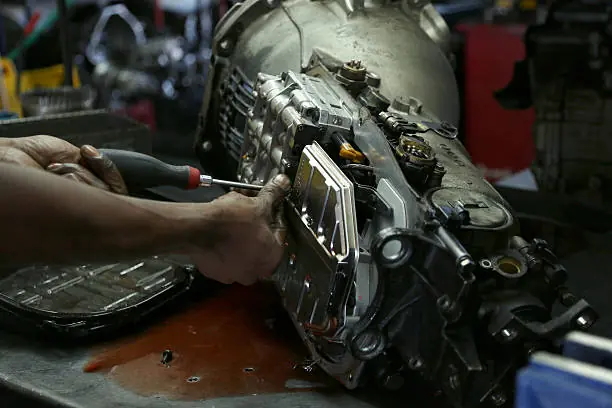
Mercedes Transmission Problems: Symptoms, Causes & Repair Guide
Mercedes transmission problems often show up as hard or jerky gear changes, slipping, delayed engagement, difficulty selecting Drive or Reverse, warning messages, limp mode, unusual noises, or fluid leaks. These symptoms don’t always point to one failed component. Low or incorrect fluid, leaks, electrical faults, solenoid or valve-body problems, control-module issues, and internal wear can all produce similar symptoms. The safest approach is to identify the exact symptom, check for obvious warning signs, and have the transmission properly diagnosed before replacing expensive parts.
If you’re reading this because your Mercedes is doing something it shouldn’t, you’re probably trying to figure out three things: what’s going on, whether it’s serious, and whether you can keep driving. Let’s go through it properly.
What Are the Symptoms of Mercedes Transmission Problems?
The most common signs drivers notice include:
- Hard or rough gear changes
- Jerking or shuddering when shifting
- Slipping (engine revs rise but the car doesn’t accelerate the way it should)
- Delayed engagement when moving from Park to Drive or Reverse
- The car getting stuck in one gear
- Limp mode (the car restricts power and won’t shift normally)
- A transmission warning message on the dashboard
- Whining, buzzing, or clunking noises
- A burning smell
- Fluid leaks under the car
- Overheating during long drives or traffic
- No movement at all when you put the car in Drive
Not every symptom means the same thing, and that’s the part worth understanding before you start guessing at repairs.
Why Is My Mercedes Transmission Slipping?
Slipping usually means the transmission isn’t fully transferring engine power to the wheels, even though the engine is revving normally.
Possible causes: low or degraded transmission fluid, worn clutch packs, a failing torque converter, or an electrical fault affecting shift pressure.
Symptoms: rising RPM without matching acceleration, a delay before the car “catches” the gear, or a feeling of the car surging.
Diagnosis: a fluid check, a diagnostic scan for fault codes, and live data readings to see how the transmission is actually behaving under load.
Recommended action: don’t ignore it. Slipping tends to get worse, and continued driving can accelerate wear on internal components.
Why Is My Mercedes Transmission Jerking?
Jerking or shuddering during gear changes has several possible explanations, and it’s not something you can diagnose from the seat.
Possible causes: solenoid issues, valve-body problems, worn engine or transmission mounts, low fluid, or software adaptation values that need resetting.
Jerking doesn’t automatically mean the valve body is bad — that’s one possibility among several, and proper diagnosis is what separates a cheap fix from an expensive one.
Diagnosis: fault code scan, live data during a road test, and a mechanical inspection to rule out mounts or other non-transmission causes.
Recommended action: get it scanned before assuming the worst. Some causes of jerking are minor and inexpensive to resolve.
Why Is My Mercedes Shifting Hard?
Hard shifting means you feel a noticeable “thump” or harshness between gears instead of a smooth transition.
Possible causes: fluid contamination, a failing solenoid, adaptation values that have drifted, or wear inside the transmission itself.
Diagnosis: fluid condition check, fault code scan, and adaptation value review where applicable.
Recommended action: a fluid service resolves this in some cases. In others, it points to something more involved. This is exactly why diagnosis comes before parts.
Why Is My Mercedes Stuck in One Gear?
This is one of the more concerning symptoms, and it usually triggers limp mode as a protective measure.
Possible causes: a serious fault code, an electrical fault, a failing solenoid or valve body, or in some cases a mechanical failure inside the gearbox.
Diagnosis: immediate fault code scan, electrical testing of wiring and connectors, and live data to see what the transmission control system is doing.
Recommended action: treat this as a “get it checked soon” situation rather than something to put off. Continuing to drive stuck in one gear puts extra strain on the engine and transmission.
Why Won’t My Mercedes Change Gears?
If the car won’t shift at all, or is very reluctant to move between gears, this often relates to the Transmission Control Module (TCM), the conductor plate, or a significant fault affecting the shift system.
Possible causes: TCM fault, wiring or connector issues, low fluid, or internal mechanical problems.
Diagnosis: full diagnostic scan is the starting point here — guessing at parts without one is how people end up paying for repairs that don’t fix the actual issue.
Why Is My Mercedes Transmission in Limp Mode?
Limp mode is the transmission’s way of protecting itself. When the system detects a fault it doesn’t consider safe to ignore, it restricts the car to one or two gears and limits power.
Possible causes: almost anything from a minor sensor fault to a more serious mechanical issue — that’s the point of limp mode, it’s a broad safety response, not a specific diagnosis.
Can I drive my Mercedes in limp mode? You can usually drive slowly and carefully to a safe location or workshop, but limp mode isn’t something to drive around in long-term. Repeated limp-mode activation means the underlying fault needs to be found.
How Do I Know If My Mercedes Gearbox Is Failing?
Look at the pattern, not just a single moment. One odd shift on a cold morning isn’t the same as consistent slipping, repeated warning messages, or fluid appearing under the car. Recurring symptoms, especially combined with a warning light or limp mode, are the clearest sign that something needs professional attention.
A fault code is a diagnostic clue, not proof on its own that a specific part must be replaced. The code tells a technician where to look, not automatically what to replace.
Can I Drive My Mercedes With a Transmission Problem?
It depends entirely on what you’re experiencing. Some symptoms are safe to drive with carefully for a short distance. Others aren’t.
Stop driving and arrange professional assistance if you notice:
- Severe slipping
- Complete loss of drive
- Inability to select Drive or Reverse
- Major fluid leakage
- A strong burning smell
- Overheating
- Severe mechanical noise
- Repeated limp-mode activation
- Unpredictable gear engagement
Minor hesitation or an occasional rough shift is generally lower risk in the short term, but it still shouldn’t be ignored indefinitely. When in doubt, treat the car cautiously rather than assuming it’s fine.
What Causes Mercedes Transmission Problems?
There’s rarely a single cause. The most common contributors are:
- Transmission fluid — low level, wrong fluid type, or degraded fluid affects shift quality and cooling
- Fluid leaks — from seals, cooler lines, or the pan gasket
- Solenoids — control fluid flow and shift timing; a faulty one can cause slipping, harsh shifts, or delayed engagement
- Valve body — directs fluid to the right places; problems here often cause erratic or delayed shifting
- VGS (electronic transmission control) — part of the electronic system that manages gear selection. A fault here can affect shifting, but the exact cause still needs confirming with diagnostics
- TCM (Transmission Control Module) — the computer managing shift decisions
- Conductor plate — houses internal electronics and sensors inside the transmission
- Torque converter — transfers power from engine to transmission; wear here often shows up as shuddering or slipping
- Clutch packs — internal components that wear over time and cause slipping when worn
- Electrical faults — wiring, connectors, or sensors sending incorrect signals
- Software or adaptation issues — the transmission “learns” shift patterns over time; incorrect adaptation values can cause rough shifting
- Mechanical wear — general age and mileage-related internal wear
Mercedes Transmission Types: Why the Same Symptom Isn’t Always the Same Problem
Not every Mercedes uses the same transmission, and the exact gearbox depends on the model, model year, engine, and specification. This matters because diagnosis and repair approach can differ.
- 5G-Tronic (722.6) — used in older Mercedes models, a 5-speed automatic
- 7G-Tronic (722.9) — a 7-speed automatic used across many 2000s–2010s models
- 9G-Tronic (725.0) — the 9-speed automatic found in most current Mercedes models
- AMG SPEEDSHIFT transmissions — performance-tuned versions used in AMG models, with different shift characteristics and tolerances
- Dual-clutch transmissions — used in select Mercedes and AMG models, operating differently from traditional torque-converter automatics
A technician working on your car needs to know exactly which transmission it has before making any diagnostic or repair decision.
Core Problem-Solving Table
| Symptom | Possible Causes | How Serious Can It Be? | What Should Be Checked? |
|---|---|---|---|
| Hard shifting | Low/contaminated fluid, solenoid fault, adaptation drift | Moderate — can worsen if ignored | Fluid condition, fault codes, adaptation values |
| Jerking | Solenoid, valve body, mounts, low fluid | Moderate to serious | Fault codes, live data, mechanical inspection |
| Slipping | Worn clutch packs, torque converter wear, low fluid | Serious — can escalate quickly | Fluid level/condition, live data under load |
| Delayed engagement | Low fluid, valve body wear, electrical fault | Moderate | Fluid, fault codes, wiring |
| Stuck in one gear | TCM fault, solenoid, electrical fault, mechanical failure | Serious | Full diagnostic scan, electrical test |
| Limp mode | Broad — sensor fault to major mechanical issue | Depends on trigger — treat as serious until diagnosed | Fault codes, live data |
| Warning message | Any transmission-related fault | Varies — always worth checking | Diagnostic scan |
| Shuddering | Torque converter, mounts, fluid condition | Moderate to serious | Fluid, torque converter behavior, mounts |
| Difficulty selecting Reverse | Low fluid, valve body, internal wear | Moderate to serious | Fluid, fault codes, mechanical inspection |
| Difficulty selecting Drive | Low fluid, valve body, electrical fault | Moderate to serious | Fluid, fault codes, electrical test |
| Whining/buzzing | Fluid level, pump wear, internal wear | Moderate | Fluid level, noise source inspection |
| Fluid leak | Seals, pan gasket, cooler lines | Depends on severity — can become serious | Leak source inspection, fluid level |
| Burning smell | Overheating fluid, clutch pack wear | Serious | Fluid condition, temperature, mechanical inspection |
| Overheating | Low fluid, cooler fault, heavy load driving | Serious | Fluid level, cooling system, driving conditions |
| No movement in Drive | Major mechanical or electrical failure | Serious | Full diagnostic and mechanical inspection |
How Are Mercedes Transmission Problems Diagnosed?
Proper diagnosis follows a logical sequence rather than jumping straight to a repair:
- Identify the exact symptom and when it happens
- Confirm the model, year, and transmission type
- Inspect for visible leaks
- Check fluid condition and level where applicable
- Perform a Mercedes-capable diagnostic scan
- Read transmission-related fault codes
- Review relevant live data
- Check adaptation values where applicable
- Inspect wiring and connectors
- Test relevant transmission components
- Road-test the car when it’s safe to do so
- Confirm the underlying cause
- Recommend repair based on the diagnostic evidence, not guesswork
Diagnosis should always come before expensive parts replacement. Replacing a valve body or solenoid pack without confirming that’s actually the problem is one of the most common ways owners end up paying twice.
Driving in Dubai: Why It Matters for Transmission Health
Dubai’s driving conditions genuinely affect how a transmission ages. High ambient temperatures put extra strain on transmission fluid and cooling systems. Heavy traffic and stop-start driving mean more shifting cycles and more time in lower gears generating heat. Long periods of idling in traffic or at drop-off points add to that heat load over time. On top of that, vehicle age, mileage, and how consistently the car has been maintained all play a role in how well the transmission holds up — as does whether a fluid leak has been sitting unnoticed for a while, slowly dropping fluid levels.
None of this means every Mercedes in Dubai will develop transmission problems. It just means the conditions here make fluid checks and prompt attention to early symptoms more important than they might be in a cooler climate with lighter traffic.
What Should I Do If My Mercedes Shows a Transmission Warning?
Don’t ignore it, but don’t panic either. A warning message means the system has detected something worth flagging — it doesn’t tell you on its own whether that’s a fluid top-up or something bigger. The right next step is a proper diagnostic scan to read the actual fault codes and see what they’re pointing to.
If your Mercedes is showing any of the symptoms above, Station One Autos can help identify the underlying problem through proper inspection and diagnosis, using Mercedes-capable diagnostic tools to check fault codes, live data, and fluid condition before recommending any repair. Getting an accurate diagnosis first means you’re only paying for the repair your car actually needs.